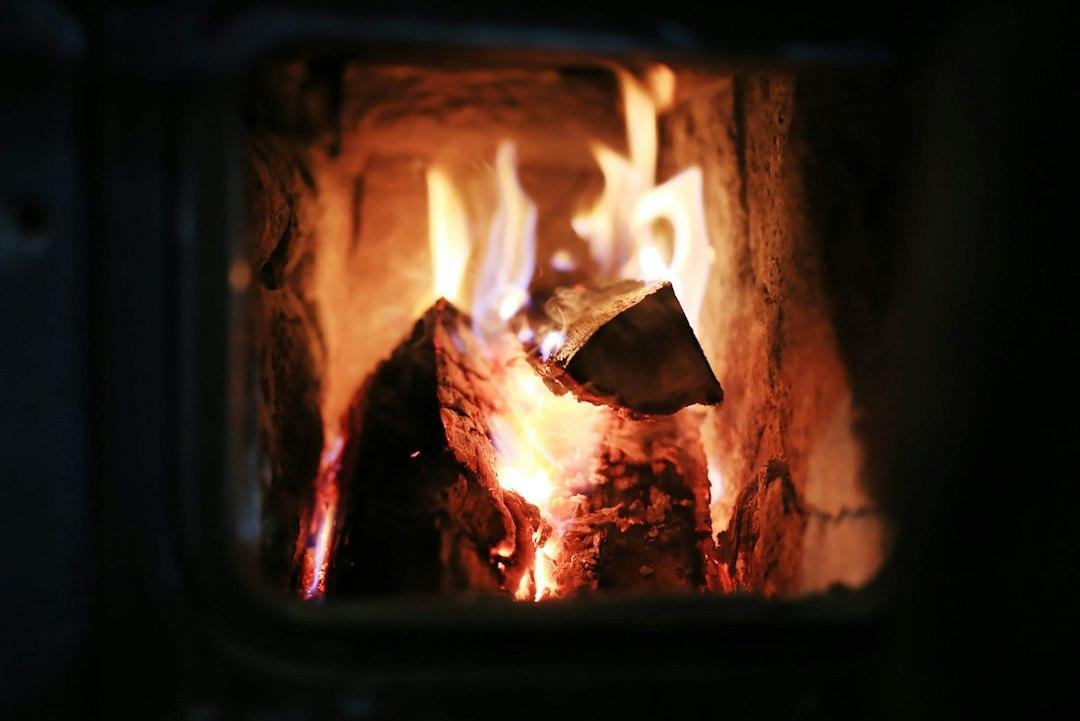
Two ways to burn, two kinds of owner
Both stoves will heat a room well. Both burn wood, in a sense, since pellets are sawdust pressed hard. The difference is in everything around the fire. A wood stove asks you to be a bit of a woodcutter: find fuel, split it, stack it, let it dry and tend the fire. A pellet stove asks you to be a bit of a mechanic: buy fuel by the bag, keep the stove clean and keep it powered.
We sweep and repair both kinds around Lomita, Torrance, Carson and Hawthorne. Here is how they compare from where we usually stand, which is on a roof or kneeling in front of one.
Fuel and where you keep it
Firewood is cheapest when it comes from a tree trimmer or a neighbor's felled tree, and dearest bought by the bundle at a store. Either way it needs room: a covered stack off the ground, away from the house walls because of insects, and a year or so to dry. A small South Bay lot does not always have that room.
Pellets come in bags, stack on a pallet, and are ready to burn the day you buy them. You pay for every bag, but you never wait a year for fuel to be ready. They do need to stay dry. A bag that has drawn damp from a garage floor turns to dust in the feed.
Power
A wood stove does not care whether the lights are on. That counts for a lot on a winter night when a storm takes the power out. A pellet stove needs electricity to feed itself and run its blowers, so when the power goes, the heat goes with it, and a little smoke can come into the room as the fire dies.
The daily work
With wood, you load every few hours, empty the ash pan, and start from kindling unless the coals held overnight. With pellets, you fill the hopper when it runs low, scrape the burn pot, and empty the ash traps on the schedule the maker sets. Pellets take less of your evening; wood takes less of your money if you can source it.
Chimney and venting
A wood stove needs a real chimney: a masonry flue with a sound liner, or a listed factory built chimney through the roof. A pellet unit can often vent out through a side wall on a short pipe, which makes it easier to add to a house with no chimney at all. That short pipe still needs care. Fine ash gathers in it, and the cap outside has to sit clear of windows, doors and walkways.
Wood flues build creosote, how fast depending on your wood and habits. Pellet vents build a fine, dry ash instead, which is less of a fire risk but still chokes the stove if it is left.
Repairs over the years
A wood stove has few moving parts. What wears is the door seal, the firebrick, the baffle and, on catalytic models, the combustor. A pellet stove has motors, fans, an igniter, sensors and a control board, and each of them can quit. Expect more small repair calls on a pellet unit, and simpler ones on a wood stove. Our posts on wood stove repair costs and pellet stove repair go through those parts one by one.
Burn day rules here
Rule 445, the South Coast AQMD wood burning rule, covers Lomita and the rest of the urban county. On a no-burn alert, the wood stays in the rack. Whichever stove you own, check the alert and the terms of the rule before you light.
Side by side
| Item | Wood stove | Pellet stove |
|---|---|---|
| Fuel | Low cost or free if you can source it | Bought by the bag |
| Electricity | None needed | Needed the whole time it runs |
| Storage | Covered stack, dried for a year | Dry bags off the floor |
| Usual upkeep | Sweeps, seals, firebrick | Vent cleaning, motors, igniter |
Our set prices apply to both. A Level 1 look at the stove, pipe and chimney is $54, brushing the flue starts from $415, and a full camera run up the flue is $390. Repairs get a written price once we have seen the stove.
Which one suits your house
- You have a wood supply, room to stack it, and you like tending a fire: wood.
- You want to set a temperature and leave it, and do not mind regular cleaning: pellet.
- Outages are common on your street: wood, or pellet with a plan for when the power drops.
- No chimney and no wish to build one: pellet through the wall, or gas.
Describe the room, what heats it now and how you would like to use the stove through the quote form, and we will tell you which way we would lean and what the visit costs.
And what about gas?
Some people who ask this question end up somewhere else. If the room already has an open masonry hearth and what you want is heat at the press of a button, a gas unit set into that hearth on its own vent costs $2,750 to $5,550 with us, installed. If the room has no chimney at all, a sealed gas fireplace vented through the wall costs $4,450 to $8,900. That is a different trade: no woodpile, no ash, no burn day worries, and a gas bill in their place.
Whichever way you are leaning, the contact page reaches us, and we can come and look at the room with you.
Stove Not Burning the Way It Should?
Latimer repairs wood and pellet stoves, sweeps the flues behind them and fixes the chimneys they vent through. Most of our work is in Lomita, Torrance, Carson and Hawthorne, with the rest of the South Bay close behind.